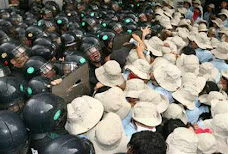
México, alza tu voz hasta curarle a la justicia la sordera, que se alce también tu razón y tu cordura. México, mi más sentido pésame. Si mis manos no hacen nada, que lo haga mi palabra.” Juan Ríos Cantú Debido a la impunidad que existe en México, muchos de nuestr@s muert@s no descansan en paz:
* Las 544 mujeres y niñas secuestradas, violadas, torturadas y asesinadas en Ciudad Juárez y Chihuahua, víctimas del femicidio desde 1993 a la fecha http://www.mujeresdejuarez.org
* La abogada y defensora de derechos humanos Digna Ochoa y Plácido asesinada luego de múltiples amenazas, en 2001 http://comitedigna.blogspot.com – http://decadacontraaimpunidad.blogspot.com
* El estudiante y activista social de 21 años Pável González, secuestrado, torturado y asesinado en 2004 http://www.espora.org/pavelgonzalez
* Los jóvenes Javier Cortés Santiago y Alexis Benhumea, asesinados durante la brutal represión por parte de la policía en San Salvador Atenco, operativo ordenado por el gobernador Enrique Peña Nieto y coordinado pro Wilfrido Robledo, en mayo de 2006 http://mujeressinmiedo.blogspot.com - http://web.amnesty.org/library/Index/ESLAMR410182007
* Los 65 mineros muertos en el desastre de la mina Pasta de Conchos, Coahuila, en 2006
* El periodista norteamericano colaborador de la red Indymedia Bradley Roland Will (Brad Will), junto a otras 30 personas asesinadas durante la rebelión de Oaxaca contra el gobernador Ulises Ruiz, en 2006 http://www.friendsofbradwill.org - http://www.bradwill.org - http://www.asambleapopulardeoaxaca.com
* La anciana indígena de la Zongolica doña Ernestina Ascencio Rosario, violada tumultuariamente y asesinada por militares en 2007 http://www.unidad.org.mx/temas/denuncia/ernestina.html
* Las dos periodistas triquis, Felícitas Martínez, de 22 años, y Teresa Bautista, de 24, de la radio comunitaria Copala “La voz que rompe el silencio”, acribilladas en 2008 http://eljustoreclamo.blogspot.com/2008/04/dos-periodistas-triquis-asesinadas-en.html
* Los asesinados en las masacres de Aguas Blancas, El Charco, El Bosque, Acteal, en las comunidades zapatistas, así como el jueves de Corpus de 1971 y de Tlatelolco el 2 de octubre de 1968 http://www.patriagrande.net/mexico/aguas.blancas/index.html - http://www.derechos.org/limeddh/informes/charco.html - http://www.eureka.org
Ninguno de estos homicidios ha sido resuelto satisfactoriamente; en muchos de los casos el gobierno dice que se trató de “suicidios”, en otros se buscan chivos expiatorios o se encarcela a personas inocentes. Los homicidas, así como los autores materiales e intelectuales de estos crímenes, siguen libres y gozan de plena impunidad.
EN MÉXICO SE CRIMINALIZA LA LUCHA SOCIAL
EN MÉXICO SE TORTURA
MÉXICO = IMPUNIDAD
QUE NO QUEREMOS CAMBIAR???
Infórmate: no seamos cómplices http://contraimpunidad.blogspot.com
Mostrando entradas con la etiqueta Human Rights. Mostrar todas las entradas
Mostrando entradas con la etiqueta Human Rights. Mostrar todas las entradas
lunes, 27 de octubre de 2008

miércoles, 22 de octubre de 2008
Parwez Kambakhsh: 20 yrs. for asking questions in class about women's rights under Islam.

Afghans spare journalism student accused of blasphemy
The Associated Press
Tuesday, October 21, 2008
KABUL: An Afghan appeals court on Tuesday overturned a death sentence for a journalism student accused of blasphemy for asking questions in class about women's rights under Islam. Instead, the judges sentenced him to 20 years in prison.
The case against the journalist, 24-year-old Parwez Kambakhsh, whose brother has angered Afghan warlords with his own writings, has come to symbolize Afghanistan's slide toward an ultraconservative view on religious and individual freedoms.
"I don't accept the court's decision," Kambakhsh said as he was leaving the courtroom. "It is an unfair decision."
The case can be appealed to the Afghan Supreme Court.
John Dempsey, an American lawyer who has been working for six years to reform the Afghan justice system, said Kambakhsh had yet to get a fair trial.
"Procedurally, he did not have many of his rights respected," said Dempsey, who attended the trial. "He was detained far longer than he should have been legally held. The defense lawyer was not even allowed to meet the witnesses until a night before the trial."
Kambakhsh was studying journalism at Balkh University in the northern city of Mazar-i-Sharif and writing for local newspapers when he was arrested in October 2007.
Besides the accusation that Kambakhsh disrupted class with his questions, prosecutors also said he illegally distributed an article he printed off the Internet that asks why Islam does not modernize to give women equal rights. He is also accused of writing his own comments on the paper.
In January, a lower court sentenced him to death in a trial that critics have called flawed in part because Kambakhsh had no lawyer representing him.
Muslim clerics welcomed that court's decision, and public demonstrations were held against the journalism student because of perceptions that he had violated the tenets of Islam.
On Tuesday, five witnesses from Mazar-i-Sharif - two students and three teachers - appeared before the three-judge panel.
The first witness, a student who gave only one name, Hamid, told the court that he had been forced into making a statement accusing Kambakhsh of blasphemy by members of the Afghan intelligence service and by a professor. He said the professor threatened him with expulsion.
Other witnesses, however, testified that Kambakhsh had violated tenets of Islam.
The head of the panel in the Tuesday proceedings, Abdul Salaam Qazizada, struck down the lower court's death penalty and sentenced Kambakhsh to 20 years behind bars.
The New York-based Committee to Protect Journalists condemned the sentence.
"Even though Kambakhsh's death penalty was overturned, today's sentencing is a great disappointment and a setback for the rights of free expression in Afghanistan," Bob Dietz, Asia program coordinator for the organization, said in a statement.
The committee said earlier that it was concerned that Kambakhsh might have been targeted because his brother, Yaqub Ibrahimi, had written about human rights violations and local politics.
Ibrahimi said Tuesday that his brother was sentenced because of the pressure from warlords and other strongmen in northern Afghanistan, whom he has criticized in his writings.
The Associated Press
Tuesday, October 21, 2008
KABUL: An Afghan appeals court on Tuesday overturned a death sentence for a journalism student accused of blasphemy for asking questions in class about women's rights under Islam. Instead, the judges sentenced him to 20 years in prison.
The case against the journalist, 24-year-old Parwez Kambakhsh, whose brother has angered Afghan warlords with his own writings, has come to symbolize Afghanistan's slide toward an ultraconservative view on religious and individual freedoms.
"I don't accept the court's decision," Kambakhsh said as he was leaving the courtroom. "It is an unfair decision."
The case can be appealed to the Afghan Supreme Court.
John Dempsey, an American lawyer who has been working for six years to reform the Afghan justice system, said Kambakhsh had yet to get a fair trial.
"Procedurally, he did not have many of his rights respected," said Dempsey, who attended the trial. "He was detained far longer than he should have been legally held. The defense lawyer was not even allowed to meet the witnesses until a night before the trial."
Kambakhsh was studying journalism at Balkh University in the northern city of Mazar-i-Sharif and writing for local newspapers when he was arrested in October 2007.
Besides the accusation that Kambakhsh disrupted class with his questions, prosecutors also said he illegally distributed an article he printed off the Internet that asks why Islam does not modernize to give women equal rights. He is also accused of writing his own comments on the paper.
In January, a lower court sentenced him to death in a trial that critics have called flawed in part because Kambakhsh had no lawyer representing him.
Muslim clerics welcomed that court's decision, and public demonstrations were held against the journalism student because of perceptions that he had violated the tenets of Islam.
On Tuesday, five witnesses from Mazar-i-Sharif - two students and three teachers - appeared before the three-judge panel.
The first witness, a student who gave only one name, Hamid, told the court that he had been forced into making a statement accusing Kambakhsh of blasphemy by members of the Afghan intelligence service and by a professor. He said the professor threatened him with expulsion.
Other witnesses, however, testified that Kambakhsh had violated tenets of Islam.
The head of the panel in the Tuesday proceedings, Abdul Salaam Qazizada, struck down the lower court's death penalty and sentenced Kambakhsh to 20 years behind bars.
The New York-based Committee to Protect Journalists condemned the sentence.
"Even though Kambakhsh's death penalty was overturned, today's sentencing is a great disappointment and a setback for the rights of free expression in Afghanistan," Bob Dietz, Asia program coordinator for the organization, said in a statement.
The committee said earlier that it was concerned that Kambakhsh might have been targeted because his brother, Yaqub Ibrahimi, had written about human rights violations and local politics.
Ibrahimi said Tuesday that his brother was sentenced because of the pressure from warlords and other strongmen in northern Afghanistan, whom he has criticized in his writings.
martes, 21 de octubre de 2008
women’s rights advocate arrested
http://www.feministing.com/archives/011694.html
http://www.change4equality.org/english/spip.php?article373
Esha Momeni, women’s rights advocate and Campaign's volunteer from California was arrested on Wednesday October 15, 2008, while on a visit to Tehran. Momeni who is a photographer and graduate student was arrested in an unusual and illegal manner after being pulled over on Moddaress highway, by individuals who identified themselves as under cover traffic police on the pretense that she had unlawfully passed another vehicle while driving. Esha was arrested and taken to Section 209 of Evin Prison, managed by the Intelligence and Security Ministry.Esha Momeni is a graduate student at the School of Communications, Media and Arts at California State University, Northridge. Esha had come to Iran two months ago to visit with her family and to work on her Masters thesis project, focused on the Iranian women’s movement.
Indígenas de Cauca, Colombia
Estimados amigos,
Las fuerzas de seguridad colombianas han reprimido fuertemente a los grupos indígenas. Envíale un mensaje al Presidente Uribe para que detenga la represión y dialogue con los líderes indígenas.
Actúa ahora
En los últimos diez días, las comunidades indígenas de la región colombiana de Cauca se reunieron para reclamar sus derechos sobre las tierras en las que han vivido durante miles de años y para protestar por las muertes de líderes indígenas. Pero en lugar de sentarse a dialogar, el Presidente colombiano Álvaro Uribe envió a las fuerzas de seguridad que abrieron fuego contra los manifestantes.
Las medidas violentas provocaron el enojo entre las comunidades indígenas y el apoyo a los manifestantes se ha hecho sentir en todo el país. 200.000 indígenas de 16 departamentos colombianos ya se han unido a este movimiento de protesta. Mañana habrá una marcha a Cali para mostrarle al gobierno colombiano que se proseguirá con la protesta hasta que todos los puntos cuestionados estén resueltos. El levantamiento puede generar una reacción aún más violenta y brutal de parte de las fuerzas de seguridad colombianas. No podemos dejar que esto suceda, enviemos ya mismo un mensaje al Presidente de Colombia Álvaro Uribe pidiéndole que detenga la violencia y la represión a los manifestantes y acepte la invitación de los líderes indígenas para reunirse. A Uribe le importa su reputación internacional. Al enviarle miles de mensajes, le demostraremos que estamos mirando de cerca su accionar.
Envía tu mensaje ahora: www.avaaz.org/es/derechos_indigenas_colombia
Los indígenas de Colombia tienen derecho a la protesta. Según la ONIC (Organización Nacional Indígena de Colombia), más de 1.253 indígenas han muerto y 54.000 han sido expulsados de sus tierras ancestrales desde que asumió Uribe en la presidencia del país. Les han prometido ser dueños legales de sus tierras, pero el Presidente Uribe no ha mantenido su palabra. Con los precios de las tierras en alza debido a la rentabilidad de las plantaciones de palma, Uribe ya no parece estar dispuesto a comprar estas tierras para las comunidades indígenas. Las organizaciones indígenas están pidiendo reunirse con Uribe para presentarle una lista de 12 puntos a resolver. El gobierno colombiano no ha firmado la Declaración de Derechos de los Pueblos Indígenas de Naciones Unidas que establece que "los pueblos indígenas tienen derecho a las tierras, territorios y recursos que tradicionalmente han poseído" y que "los Estados asegurarán el reconocimiento y protección jurídicos de esas tierras, territorios y recursos que tradicionalmente han poseído". Si actuamos en conjunto y llenamos la casilla de correo del Presidente Uribe, estos grupos indígenas tienen entonces una posibilidad de ser escuchados. Haz clic abajo para enviar tu mensaje: www.avaaz.org/es/derechos_indigenas_colombia Los indígenas de Colombia y de todas partes merecen respeto y su derecho a las tierras es legítimo. Durante demasiado tiempo América Latina ha sido guiada por los intereses de los poderosos, los políticos o los terratenientes. Es tiempo de ponerse de pie por esta gente, su cultura y sus derechos en América Latina.
Con esperanza, Ricken, Graziela, Paula, Pascal y todo el equipo de Avaaz
http://lta.reuters.com/article/domesticNews/idLTASIE49F03W20081016?sp=true http://www.urgente24.com/index.php?id=ver&tx_ttnews[tt_news]=110228&cHash=c3dc1bcfdc --------------------------------------
ACERCA DE AVAAZAvaaz es una organización independiente y sin fines de lucro cuya misión es asegurar que los valores y opiniones de la mayoría de la gente sean tomados en cuenta en las políticas que nos gobiernan.‘Avaaz’ significa ‘voz’ en varios idiomas asiáticos y europeos. Avaaz no acepta dinero de gobiernos ni de empresas y su equipo está basado en oficinas en Londres, Nueva York, Washington, Ginebra, Paris y Rio de Janeiro. Haz clic aquí para saber más sobre nuestras campañas más importantes.No se te olvide visitar nuestras páginas en Facebook y Myspace y Bebo
Las fuerzas de seguridad colombianas han reprimido fuertemente a los grupos indígenas. Envíale un mensaje al Presidente Uribe para que detenga la represión y dialogue con los líderes indígenas.
Actúa ahora
En los últimos diez días, las comunidades indígenas de la región colombiana de Cauca se reunieron para reclamar sus derechos sobre las tierras en las que han vivido durante miles de años y para protestar por las muertes de líderes indígenas. Pero en lugar de sentarse a dialogar, el Presidente colombiano Álvaro Uribe envió a las fuerzas de seguridad que abrieron fuego contra los manifestantes.
Las medidas violentas provocaron el enojo entre las comunidades indígenas y el apoyo a los manifestantes se ha hecho sentir en todo el país. 200.000 indígenas de 16 departamentos colombianos ya se han unido a este movimiento de protesta. Mañana habrá una marcha a Cali para mostrarle al gobierno colombiano que se proseguirá con la protesta hasta que todos los puntos cuestionados estén resueltos. El levantamiento puede generar una reacción aún más violenta y brutal de parte de las fuerzas de seguridad colombianas. No podemos dejar que esto suceda, enviemos ya mismo un mensaje al Presidente de Colombia Álvaro Uribe pidiéndole que detenga la violencia y la represión a los manifestantes y acepte la invitación de los líderes indígenas para reunirse. A Uribe le importa su reputación internacional. Al enviarle miles de mensajes, le demostraremos que estamos mirando de cerca su accionar.
Envía tu mensaje ahora: www.avaaz.org/es/derechos_indigenas_colombia
Los indígenas de Colombia tienen derecho a la protesta. Según la ONIC (Organización Nacional Indígena de Colombia), más de 1.253 indígenas han muerto y 54.000 han sido expulsados de sus tierras ancestrales desde que asumió Uribe en la presidencia del país. Les han prometido ser dueños legales de sus tierras, pero el Presidente Uribe no ha mantenido su palabra. Con los precios de las tierras en alza debido a la rentabilidad de las plantaciones de palma, Uribe ya no parece estar dispuesto a comprar estas tierras para las comunidades indígenas. Las organizaciones indígenas están pidiendo reunirse con Uribe para presentarle una lista de 12 puntos a resolver. El gobierno colombiano no ha firmado la Declaración de Derechos de los Pueblos Indígenas de Naciones Unidas que establece que "los pueblos indígenas tienen derecho a las tierras, territorios y recursos que tradicionalmente han poseído" y que "los Estados asegurarán el reconocimiento y protección jurídicos de esas tierras, territorios y recursos que tradicionalmente han poseído". Si actuamos en conjunto y llenamos la casilla de correo del Presidente Uribe, estos grupos indígenas tienen entonces una posibilidad de ser escuchados. Haz clic abajo para enviar tu mensaje: www.avaaz.org/es/derechos_indigenas_colombia Los indígenas de Colombia y de todas partes merecen respeto y su derecho a las tierras es legítimo. Durante demasiado tiempo América Latina ha sido guiada por los intereses de los poderosos, los políticos o los terratenientes. Es tiempo de ponerse de pie por esta gente, su cultura y sus derechos en América Latina.
Con esperanza, Ricken, Graziela, Paula, Pascal y todo el equipo de Avaaz
http://lta.reuters.com/article/domesticNews/idLTASIE49F03W20081016?sp=true http://www.urgente24.com/index.php?id=ver&tx_ttnews[tt_news]=110228&cHash=c3dc1bcfdc --------------------------------------
ACERCA DE AVAAZAvaaz es una organización independiente y sin fines de lucro cuya misión es asegurar que los valores y opiniones de la mayoría de la gente sean tomados en cuenta en las políticas que nos gobiernan.‘Avaaz’ significa ‘voz’ en varios idiomas asiáticos y europeos. Avaaz no acepta dinero de gobiernos ni de empresas y su equipo está basado en oficinas en Londres, Nueva York, Washington, Ginebra, Paris y Rio de Janeiro. Haz clic aquí para saber más sobre nuestras campañas más importantes.No se te olvide visitar nuestras páginas en Facebook y Myspace y Bebo
Violaciones de Derechos Humanos en la Comunidad Indígena Miguel Hidalgo (Chiapas, México)
El 3 de octubre, los miembros de la comunidad indígena Miguel Hidalgo, municipio de La Trinitaria, fueron testigos de una operación policial en la que murieron 6 personas y 17 resultaron heridas. Amnistía Internacional teme que puedan correr riesgo de represalias e intimidación.La mañana del 3 de octubre, un grupo de unos 40 agentes de la policía estatal entró en la comunidad de Miguel Hidalgo con la intención aparente de detener a los dirigentes comunitarios responsables de organizar la ocupación de las ruinas mayas de Chinkultic, una zona arqueológica y atracción turística cercana. Los habitantes se resistieron a la intervención policial rodeando a los agentes, desarmándolos y reteniéndolos en el centro comunitario. Por la tarde, un operativo policial de mayor envergadura, en el que participaron unos 300 agentes, irrumpió en la comunidad disparando sus armas y lanzando botes de gases lacrimógenos. Dos personas que protestaban resultaron muertas y 17 sufrieron heridas. Los habitantes de la comunidad respondieron arrojando piedras.
Según testigos presenciales, Agustín Alfaro Alfaro, que vivía cerca de la comunidad Miguel Hidalgo, acudió al lugar de los hechos junto con su esposa y su hijo para transportar a un hospital a algunas de las personas que estaban heridas. En el camino, desde un vehículo policial se disparó contra la furgoneta de Agustín Alfaro, que fue interceptada. Los agentes obligaron a Agustín Alfaro, que había resultado herido de bala en una pierna, a salir de la furgoneta y le dispararon en el pecho. A continuación la policía disparó contra otras cuatro personas que estaban dentro de la furgoneta. Agustín Alfaro y otros tres hombres murieron en el acto.
El 6 de octubre, el gobernador del estado pidió públicamente disculpas a las víctimas y sus familias por la operación policial del 3 de octubre. El gobernador anunció la detención de algunos agentes de policía implicados en los disparos y la apertura de una investigación sobre la operación. También se ofreció a los familiares de las víctimas cierta ayuda económica y social.
A pesar de las medidas positivas iniciales del gobernador, Amnistía Internacional considera motivo de preocupación el hecho de que testigos de los sucesos del 3 de octubre puedan correr el riesgo de sufrir intimidación y amenazas con el fin de disuadirlos a ellos, a sus familiares y a los miembros de la comunidad de buscar justicia. Contribuye a aumentar la preocupación el hecho de que en algunos casos anteriores que Amnistía Internacional ha documentado, el procesamiento de agentes de policía por violaciones graves de derechos humanos ha desembocado en amenazas y actos de intimidación contra víctimas y testigos.
Prensa:http://www.jornada.unam.mx/2008/10/17/index.php?section=politica&article=019n2pol
http://www.jornada.unam.mx/2008/10/17/index.php?section=politica&article=019n1pol
http://www.cimacnoticias.com/site/08101712-Teme-AI-represalias.35269.0.html
Según testigos presenciales, Agustín Alfaro Alfaro, que vivía cerca de la comunidad Miguel Hidalgo, acudió al lugar de los hechos junto con su esposa y su hijo para transportar a un hospital a algunas de las personas que estaban heridas. En el camino, desde un vehículo policial se disparó contra la furgoneta de Agustín Alfaro, que fue interceptada. Los agentes obligaron a Agustín Alfaro, que había resultado herido de bala en una pierna, a salir de la furgoneta y le dispararon en el pecho. A continuación la policía disparó contra otras cuatro personas que estaban dentro de la furgoneta. Agustín Alfaro y otros tres hombres murieron en el acto.
El 6 de octubre, el gobernador del estado pidió públicamente disculpas a las víctimas y sus familias por la operación policial del 3 de octubre. El gobernador anunció la detención de algunos agentes de policía implicados en los disparos y la apertura de una investigación sobre la operación. También se ofreció a los familiares de las víctimas cierta ayuda económica y social.
A pesar de las medidas positivas iniciales del gobernador, Amnistía Internacional considera motivo de preocupación el hecho de que testigos de los sucesos del 3 de octubre puedan correr el riesgo de sufrir intimidación y amenazas con el fin de disuadirlos a ellos, a sus familiares y a los miembros de la comunidad de buscar justicia. Contribuye a aumentar la preocupación el hecho de que en algunos casos anteriores que Amnistía Internacional ha documentado, el procesamiento de agentes de policía por violaciones graves de derechos humanos ha desembocado en amenazas y actos de intimidación contra víctimas y testigos.
Prensa:http://www.jornada.unam.mx/2008/10/17/index.php?section=politica&article=019n2pol
http://www.jornada.unam.mx/2008/10/17/index.php?section=politica&article=019n1pol
http://www.cimacnoticias.com/site/08101712-Teme-AI-represalias.35269.0.html
jueves, 9 de octubre de 2008
Amnesty International Germany

Newsletter Oktober 2008
60 Jahre Menschenrechte: Ich schütze sie - sie schützen mich
NEIN zur Todesstrafe!
Amnesty auf der Frankfurter Buchmesse
Ihre Spende für die Menschenrechte
Immer aktuell: www.amnesty.de
60 Jahre Menschenrechte: Ich schütze sie - sie schützen mich
Ich bin dabei - Sie auch?: 60 Jahre Allgemeine Erklärung der Menschenrechte
"Die Zeit ist überfällig, die Allgemeine Erklärung wiederzuentdecken, damit jeder von uns die darin enthaltenen Grundsätze in seinem täglichen Leben beachtet", so Desmond Tutu. Bekennen auch Sie Farbe für die Menschenrechte: Tragen Sie Ihr liebstes Menschenrecht als Button oder T-Shirt. Schenken Sie Ihren Freunden ein Armband oder schicken Sie ihnen eine Postkarte. Und machen Sie mit bei den Aktionen zum 10. Dezember 2008. Jedes Bekenntnis für die Menschenrechte zählt!
60 Jahre Menschenrechte: Mehr Informationen
Aktionen in Ihrer Nähe - Kalender
Buttons, T-Shirts, und vieles mehr gibt es im Amnesty-Shop
60 Jahre Menschenrechte: Ich schütze sie - sie schützen mich
NEIN zur Todesstrafe!
Amnesty auf der Frankfurter Buchmesse
Ihre Spende für die Menschenrechte
Immer aktuell: www.amnesty.de
60 Jahre Menschenrechte: Ich schütze sie - sie schützen mich
Ich bin dabei - Sie auch?: 60 Jahre Allgemeine Erklärung der Menschenrechte
"Die Zeit ist überfällig, die Allgemeine Erklärung wiederzuentdecken, damit jeder von uns die darin enthaltenen Grundsätze in seinem täglichen Leben beachtet", so Desmond Tutu. Bekennen auch Sie Farbe für die Menschenrechte: Tragen Sie Ihr liebstes Menschenrecht als Button oder T-Shirt. Schenken Sie Ihren Freunden ein Armband oder schicken Sie ihnen eine Postkarte. Und machen Sie mit bei den Aktionen zum 10. Dezember 2008. Jedes Bekenntnis für die Menschenrechte zählt!
60 Jahre Menschenrechte: Mehr Informationen
Aktionen in Ihrer Nähe - Kalender
Buttons, T-Shirts, und vieles mehr gibt es im Amnesty-Shop
NEIN zur Todesstrafe!
Hakamada Iwao sitzt seit 40 Jahren in Japan in der Todeszelle. Dabei gibt es bis heute kaum Indizien dafür, dass er den Mord begangen hat, für den er zum Tode verurteilt wurde. Japan gehört zu den wenigen Industrieländern, die die Todesstrafe noch anwenden.
Sagen Sie: Stopp! Mit Ihrer Unterschrift, einem Brief oder einer E-Mail können Sie mehr erreichen als Sie denken!
Amnesty auf der Frankfurter Buchmesse
"TÜRKEI - FASZINIEREND FARBIG" unter diesem Motto präsentiert sich das Gastland Türkei auf der Frankfurter Buchmesse. Gerade Schriftstellern und Journalisten drohen in der Türkei immer wieder Gefängnisstrafen - allein wegen der friedlichen Wahrnehmung ihres Rechts auf freie Meinungsäußerung. Amnesty fordert die türkische Regierung auf, alle Gesetze abzuschaffen, die die friedliche Meinungsäußerung unter Strafe stellen.Podiumsdiskussion "Menschenrechte und Meinungsfreiheit in der Türkei"auf der Buchmesse: Sonntag, 19.10.2008, 10.00 Uhr - 11.30 UhrForum Dialog, Halle 6.1.E 913AMNESTY INTERNATIONAL-STAND HALLE 3.1.E 121
"TÜRKEI - FASZINIEREND FARBIG" unter diesem Motto präsentiert sich das Gastland Türkei auf der Frankfurter Buchmesse. Gerade Schriftstellern und Journalisten drohen in der Türkei immer wieder Gefängnisstrafen - allein wegen der friedlichen Wahrnehmung ihres Rechts auf freie Meinungsäußerung. Amnesty fordert die türkische Regierung auf, alle Gesetze abzuschaffen, die die friedliche Meinungsäußerung unter Strafe stellen.Podiumsdiskussion "Menschenrechte und Meinungsfreiheit in der Türkei"auf der Buchmesse: Sonntag, 19.10.2008, 10.00 Uhr - 11.30 UhrForum Dialog, Halle 6.1.E 913AMNESTY INTERNATIONAL-STAND HALLE 3.1.E 121
Ihre Spende für die Menschenrechte
Immer wenn Amnesty International von willkürlichen Festnahmen,"Verschwindenlassen", Morddrohungen, drohender Folter und Hinrichtungenerfährt, wird eine Eilaktion gestartet. Menschenrechtsarbeit ist nicht umsonst: Über 40 Prozent dieser Aktionen sind erfolgreich. Mit Ihrer Spende helfen Sie Amnesty dabei, weiter für den Schutz der Menschenrechte einzutreten. Vielen Dank.
Direkt online spenden
Immer aktuell: www.amnesty.de
weiterlesen
nach oben
Immer wenn Amnesty International von willkürlichen Festnahmen,"Verschwindenlassen", Morddrohungen, drohender Folter und Hinrichtungenerfährt, wird eine Eilaktion gestartet. Menschenrechtsarbeit ist nicht umsonst: Über 40 Prozent dieser Aktionen sind erfolgreich. Mit Ihrer Spende helfen Sie Amnesty dabei, weiter für den Schutz der Menschenrechte einzutreten. Vielen Dank.
Direkt online spenden
Immer aktuell: www.amnesty.de
weiterlesen
nach oben
miércoles, 13 de agosto de 2008
Human Rights Watch Digest

Georgia/Russia: Use of Rocket Systems Can Harm Civilians
Human Rights Watch is deeply concerned about the use of indiscriminate weapons.
(New York, August 12, 2008) - On August 11, 2008, Human Rights Watch in South Ossetia saw Russian military trucks, including at least two Uragan 16-round multiple rocket launchers and four trucks with rockets, being moved toward South Ossetia’s administrative border with Georgia. Read more
China: Olympics Harm Key Human Rights
Chinese Government, IOC Wasted Historic Opportunity for Reform
(New York, August 6, 2008) – The 2008 Beijing Olympics will open tainted by a sharp increase in human rights abuses directly linked to China’s preparations for the games, Human Rights Watch said today. The games open on August 8, 2008. The run-up to the Beijing Olympics has been marred by a well-documented surge in violations of the rights of free expression and association, as well as media freedom. Read more
Chinese Government, IOC Wasted Historic Opportunity for Reform
(New York, August 6, 2008) – The 2008 Beijing Olympics will open tainted by a sharp increase in human rights abuses directly linked to China’s preparations for the games, Human Rights Watch said today. The games open on August 8, 2008. The run-up to the Beijing Olympics has been marred by a well-documented surge in violations of the rights of free expression and association, as well as media freedom. Read more
Burma: No Rights Reform 20 Years After Massacre
Olympics Open on Bloody Anniversary
(New York, August 7, 2008) – Twenty years after the uprising in Burma, the military government continues to sharply restrict fundamental rights and violently suppress dissent, Human Rights Watch said today. The anniversary falls as the Olympic Games open in Beijing, while the Chinese government gives crucial support to Burma’s repressive regime.Read more
Olympics Open on Bloody Anniversary
(New York, August 7, 2008) – Twenty years after the uprising in Burma, the military government continues to sharply restrict fundamental rights and violently suppress dissent, Human Rights Watch said today. The anniversary falls as the Olympic Games open in Beijing, while the Chinese government gives crucial support to Burma’s repressive regime.Read more
US: Hamdan Trial Exposes Flaws in Military Commissions
Tribunal Handicaps the Defense
(Guantanamo Bay, August 6, 2008) – The trial of Salim Hamdan, a Yemeni who has admitted to serving as Osama bin Laden’s driver and mechanic, exposed fundamental flaws of the US military commissions at Guantanamo Bay, Human Rights Watch said today. The six-member panel of military officers today found Hamdan guilty of providing material support to terrorism, but acquitted him of a conspiracy charge after two days of deliberations.Read more
Israel: Stop Plans for New West Bank Settlement
US Should Cut Aid Equal to Construction Cost
(Jerusalem, August 6, 2008) – The Israeli government’s plan to back a settlement in the occupied West Bank violates international humanitarian law and should be stopped, Human Rights Watch said today. Israeli restrictions on the Palestinian population caused by the Israeli-only settlements and infrastructure also seriously infringe on the right to freedom of movement and other basic rights of Palestinians in the West Bank.Read more
US: Migrant Detainees Suffer From Inadequate Medical Care
Improve Treatment of HIV-Positive Immigrants in Detention
(Mexico City, August 5, 2008) – Inferior medical care for HIV-positive immigrant detainees threatens their health, and ultimately their lives, Human Rights Watch said today at the 2008 International AIDS Conference in Mexico City. The US Department of Homeland Security (DHS) – the agency charged with providing health care services to detainees – fails to ensure timely HIV prevention and treatment services, putting many at risk of infection, resistance to treatment, and even death.Read more
Colombia: Proposal Threatens 'Parapolitics' Investigations
Proposed Constitutional Changes Harm Accountability, Favor Uribe Allies
(Washington, DC, August 4, 2008) — President Álvaro Uribe’s proposal to amend Colombia’s constitution would hurt accountability for politicians who collaborated with paramilitary death squads, Human Rights Watch said today. One of the Uribe administration’s proposed amendments would remove all investigations of members of Congress from the jurisdiction of the Supreme Court, which now has exclusive authority to try sitting congressmen. Read more
domingo, 3 de agosto de 2008
Calling China's Human Rights Bluff

Calling China's Human Rights Bluff
By Jim HoaglandSunday, August 3, 2008; B07
Every aspect of life under totalitarian governments is political, from sports to culture to business. President Bush and other world leaders attending the opening ceremonies of the Beijing Olympics this week should stop pretending otherwise, especially to the Chinese people.
"I made a decision not to politicize the Games," Bush grandly told Asian journalists last week, according to the People's Daily newspaper in Beijing. "This is for athletics."
Bush, French President Nicolas Sarkozy, Australian Prime Minister Kevin Rudd and their peers will be at the games precisely because they are ruling politicians, not javelin throwers or sprinters. Their protestations that politics and sports should not mix on this occasion are exercises in denying their own identities.
They should instead make their visits openly political occasions. They should publicly focus on China's human rights record and its promises to permit greater personal freedoms during the Olympics. Those promises have been bent and broken as Chinese internal security forces have used the Games as a reason to jail dissidents and keep them away from the world media.
These Olympics are all about politics -- Chinese politics. As I wrote last year from Beijing, the government intends to bring the world onto the Chinese stage, not vice versa. The governing Central Committee wants to show the nation its competence in managing a prestige event and the global acceptance it has gained in the 19 years since the Tiananmen Square massacre briefly made China a pariah state.
Sarkozy and Bush have each received lists of prominent political prisoners and requests that their cases be raised directly with President Hu Jintao in Beijing and with the Chinese media. Doing this would go a long way toward justifying the two leaders' decisions to go to Beijing.
Bush took an initial step toward that goal last week by welcoming to the White House a small but symbolically important group of Chinese dissidents, including Wei Jingsheng, a pioneer of the pro-democracy movement; Harry Wu, who has publicized China's gulag system; and representatives of the country's underground Christian movement, the Uighur minority and Tibet's exile community.
This is, in Chinese terms, an eye-popping list, similar to the red flag that Hu would wave in front of Bush if he were to host Osama bin Laden, Iran's Mahmoud Ahmadinejad and Hamas leader Ismail Haniyeh in the official Zhongnanhai compound in Beijing just before visiting Washington. While Bush's meeting received relatively little notice in the United States, it triggered sharp propaganda attacks from Beijing.
The White House made no attempt to inhibit the president's guests from circulating a full e-mail account of the meeting, complete with quotes from Bush promising to "talk about human rights" with Hu "face to face."
This was a calculated move and not an oversight by the White House, which similarly did not object two years ago when Chinese Christian activists met with Bush and then provided me with their notes for a column shortly after the encounter.
The activists at that time invited Bush to worship with "underground" Christians -- who meet in private, without official sanction -- on his next trip to China, and the president seemed open to the idea. He should follow through this week, as part of a broader international effort to impress on his official hosts the importance of freedom of religion, speech and access to information.
Amnesty International, which estimates that half a million people are being held without charges in China, issued a report last week accusing the Beijing government of using the Olympics as a pretext to "intensify" political repression.
In France, Sarkozy's decision to go to the Olympics has been particularly controversial. Daniel Cohn-Bendit, at one time a political rebel but today a senior European parliamentarian, asked the French leader to plead for the freedom of seven political prisoners, including Huang Qi, arrested in Chengdu in June for trying to organize the victims of the Sichuan earthquake to demand help.
The International Olympic Committee has shown that it will not forcefully demand that China live up to the promises it made in winning the right to host the games. This is hardly surprising for an organization that too often has allowed its approval to be bought by unrealistic promises or corrupt favors to its members. That leaves it to the national leaders who go to Beijing to rescue the political reputation of the 2008 Olympics.
Such a rescue will require commitment and coordination among like-minded leaders such as Bush and Sarkozy. They should take their cue from the Czech Vaclav Havel and the South African Desmond Tutu, who have issued an appeal for human rights to share the spotlight with the medal count at this global celebration of human perfectibility.
jimhoagland@washpost.com
By Jim HoaglandSunday, August 3, 2008; B07
Every aspect of life under totalitarian governments is political, from sports to culture to business. President Bush and other world leaders attending the opening ceremonies of the Beijing Olympics this week should stop pretending otherwise, especially to the Chinese people.
"I made a decision not to politicize the Games," Bush grandly told Asian journalists last week, according to the People's Daily newspaper in Beijing. "This is for athletics."
Bush, French President Nicolas Sarkozy, Australian Prime Minister Kevin Rudd and their peers will be at the games precisely because they are ruling politicians, not javelin throwers or sprinters. Their protestations that politics and sports should not mix on this occasion are exercises in denying their own identities.
They should instead make their visits openly political occasions. They should publicly focus on China's human rights record and its promises to permit greater personal freedoms during the Olympics. Those promises have been bent and broken as Chinese internal security forces have used the Games as a reason to jail dissidents and keep them away from the world media.
These Olympics are all about politics -- Chinese politics. As I wrote last year from Beijing, the government intends to bring the world onto the Chinese stage, not vice versa. The governing Central Committee wants to show the nation its competence in managing a prestige event and the global acceptance it has gained in the 19 years since the Tiananmen Square massacre briefly made China a pariah state.
Sarkozy and Bush have each received lists of prominent political prisoners and requests that their cases be raised directly with President Hu Jintao in Beijing and with the Chinese media. Doing this would go a long way toward justifying the two leaders' decisions to go to Beijing.
Bush took an initial step toward that goal last week by welcoming to the White House a small but symbolically important group of Chinese dissidents, including Wei Jingsheng, a pioneer of the pro-democracy movement; Harry Wu, who has publicized China's gulag system; and representatives of the country's underground Christian movement, the Uighur minority and Tibet's exile community.
This is, in Chinese terms, an eye-popping list, similar to the red flag that Hu would wave in front of Bush if he were to host Osama bin Laden, Iran's Mahmoud Ahmadinejad and Hamas leader Ismail Haniyeh in the official Zhongnanhai compound in Beijing just before visiting Washington. While Bush's meeting received relatively little notice in the United States, it triggered sharp propaganda attacks from Beijing.
The White House made no attempt to inhibit the president's guests from circulating a full e-mail account of the meeting, complete with quotes from Bush promising to "talk about human rights" with Hu "face to face."
This was a calculated move and not an oversight by the White House, which similarly did not object two years ago when Chinese Christian activists met with Bush and then provided me with their notes for a column shortly after the encounter.
The activists at that time invited Bush to worship with "underground" Christians -- who meet in private, without official sanction -- on his next trip to China, and the president seemed open to the idea. He should follow through this week, as part of a broader international effort to impress on his official hosts the importance of freedom of religion, speech and access to information.
Amnesty International, which estimates that half a million people are being held without charges in China, issued a report last week accusing the Beijing government of using the Olympics as a pretext to "intensify" political repression.
In France, Sarkozy's decision to go to the Olympics has been particularly controversial. Daniel Cohn-Bendit, at one time a political rebel but today a senior European parliamentarian, asked the French leader to plead for the freedom of seven political prisoners, including Huang Qi, arrested in Chengdu in June for trying to organize the victims of the Sichuan earthquake to demand help.
The International Olympic Committee has shown that it will not forcefully demand that China live up to the promises it made in winning the right to host the games. This is hardly surprising for an organization that too often has allowed its approval to be bought by unrealistic promises or corrupt favors to its members. That leaves it to the national leaders who go to Beijing to rescue the political reputation of the 2008 Olympics.
Such a rescue will require commitment and coordination among like-minded leaders such as Bush and Sarkozy. They should take their cue from the Czech Vaclav Havel and the South African Desmond Tutu, who have issued an appeal for human rights to share the spotlight with the medal count at this global celebration of human perfectibility.
jimhoagland@washpost.com
lunes, 28 de julio de 2008
High Commissioner for Human Rights

UN: New Human Rights Commissioner Should Take Bold Steps to Confront Abusers
Senior Post Needed in New York to Support New High Commissioner
(New York, July 18, 2008) – Navanethem Pillay, UN Secretary-General Ban Ki-moon’s presumptive nominee for the post of High Commissioner for Human Rights, should commit herself to be a voice for victims and human rights defenders worldwide, Human Rights Watch said today. An announcement of Pillay’s nomination is expected shortly, and will go to the UN General Assembly for approval.Read more
viernes, 25 de julio de 2008
neue UN-Menschenrechtskommissarin

Ban schlägt südafrikanische Richterin vor
Pillay soll neue UN-Menschenrechtskommissarin werden
Die Südafrikanerin Navanethem Pillay soll neue UN-Hochkommissarin für Menschenrechte werden. UN-Generalsekretär Ban Ki Moon schlug die 1941 geborene Juristin als Nachfolgerin von Louise Arbour vor, deren Amtszeit Ende Juni auslief. Die UN-Vollversammlung muss der Berufung noch zustimmen. Dies gilt nach intensiven Vorgesprächen jedoch als Formsache.
Pillay habe herausragende Erfahrung in Menschenrechtsfragen, ließ Ban durch seine Sprecherin erklären. Er erwarte, dass die neue Hochkommissarin die Unabhängigkeit ihres Amtes wahren und die gute Zusammenarbeit mit ihm und dem Menschenrechtsrat fortsetzen werde.

Kampf gegen Rassismus, Folter und Kriegsverbrechen
Pillay gehört in Südafrika der ethnischen Minderheit der Tamilen an. Die Juristin war UN-Angaben zufolge die erste Frau, die 1967 in der südafrikanischen Provinz Natal eine Anwaltspraxis eröffnete. Sie vertrat Apartheidsgegner und prangerte die Folgen von Folter und Einzelhaft an. Als Mitglied der Women's National Coalition setzte sich Pillay für die Verankerung von Freiheits- und Bürgerrechten in der südafrikanischen Verfassung ein.
Bild: Die Südafrikanerin Navanethem Pillay
Als erste farbige Frau wurde Pillay als Richterin an ein Oberes Gericht in Südafrika berufen. International bekannt wurde sie auf ihrem vorigen Posten als Präsidentin des Kriegsverbrechertribunals für Ruanda. Seit 2003 ist sie Richterin am Internationalen Strafgerichtshof in Den Haag.
jueves, 24 de julio de 2008
Defeat for Discrimination, Victory for Inclusion

United Nations: Defeat for Discrimination, Victory for Inclusion
Lesbian, Gay, Bisexual, and Transgender Groups Gain Consultative Status
(New York, July 23, 2008) – The decision by the United Nations Economic and Social Council (ECOSOC) granting consultative status to two groups that work on sexual orientation and gender identity is a victory in the ongoing struggle for inclusion at the UN, a coalition of six human rights organizations said today. The two groups approved on July 21 and 22, 2008 are COC Netherlands and the State Federation of Lesbians, Gays, Transsexuals and Bisexuals of Spain (FELGTB), national organizations representing lesbian, gay, bisexual, and transgender (LGBT) people in the Netherlands and Spain. “COC Netherlands is delighted about obtaining consultative status with the UN,” said Björn van Roozendaal, COC international advocacy officer. “It means we can join the efforts at the UN to address human rights violations against people with an alternative sexual orientation or gender identity.” “Spanish-speaking LGBT voices will be heard in UN meetings where human rights questions are debated,” said David Montero, FELGTB Spain’s officer for international issues and human rights. “We thank all who have contributed to this exciting outcome, and especially Spain’s UN mission for their support.” Consultative status is a key means for civil society to access the UN system. It allows nongovernmental organizations (NGOs) to deliver oral and written reports at UN meetings, and to organize events on UN premises. With it, these groups can share their information and analysis of the abuses and discrimination LGBT people confront around the world. ECOSOC, consisting of 54 member states of the UN, grants consultative status to NGOs after reviewing recommendations made by its subsidiary body – the NGO Committee – which screens the applications. COC Netherlands and FELGTB Spain join approximately 3,000 other NGOs with consultative status at the UN. However, only a handful of LGBT groups have received the status. In recent years, some states have treated LGBT groups’ applications with intense hostility, and ECOSOC has only granted such groups consultative status after first overturning negative recommendations from its NGO Committee. ECOSOC approved the Danish National Association for Gay and Lesbians, the European Region of the International Lesbian and Gay Association (ILGA-Europe), and the Lesbian and Gay Federation in Germany in December 2006. The Gay and Lesbian Coalition of Québec and the Swedish Federation for Lesbian, Gay, Bisexual and Transgender Rights gained consultative status in July 2007. The US-based International Wages Due Lesbians and Australian-based Coalition of Activist Lesbians have had consultative status at the UN for more than a decade. At its January session, the committee tied 7-7 on consultative status for FELGTB Spain, meaning the motion to recommend it failed, but at the following session in June it voted 7-6 to grant the status for COC Netherlands. At the July session in New York, ECOSOC adopted by consensus the recommendation on COC Netherlands and voted to overturn the recommendation not to grant status to FELGTB Spain. “ECOSOC has recognized the place of lesbians, gays, bisexuals and transgender people in the work of the United Nations,” said John Fisher from ARC International, which supported the groups’ advocacy efforts. “In this 60th anniversary year of the Universal Declaration of Human Rights, it is particularly important to affirm the core principle that all human beings are entitled to the full enjoyment of all human rights, without discrimination based on sexual orientation or gender identity. Yesterday’s vote sends a clear message that discrimination has no place in the UN system, and that sexual orientation and gender identity issues can, and must, be addressed.” “Many states that harass or persecute LGBT people at home also try to shut down scrutiny of their records internationally,” said Boris Dittrich, advocacy director of the Lesbian, Gay, Bisexual and Transgender Program at Human Rights Watch. “This vote ensures that two more voices will be raised to defend basic human rights at the UN.” “States from all five regions voted to overturn the negative recommendation from the NGO Committee in regards to FELGTB Spain,” said Philipp Braun, co-secretary general of the International Lesbian and Gay Association (ILGA). “We would like the committee to acknowledge the repeated message sent by ECOSOC that it should recommend LGBT groups. We also congratulate our members COC and FELGTB on their victory.” “Many states claim that ECOSOC’s votes need to follow the recommendations of its NGO Committee; the view of those who voted in favor of the LGBT groups, however, is that this cannot be done at the price of discriminating against anyone, including LGBT voices,” noted Adrian Coman from the International Gay and Lesbian Human Rights Commission (IGLHRC), who participated in monitoring the ECOSOC and NGO Committee meetings. The NGO Committee is due to review a number of additional applications from LGBT groups at its next two sessions in January and May 2009.
miércoles, 28 de mayo de 2008
amnesty international zu 60 Jahren Menschenrechtserklärung
Die Menschenrechte verlieren im "Krieg gegen Terror"
Als die Mitgliedsstaaten der Uno 1948 die "Allgemeine Erklärung der Menschenrechte" verabschiedeten, war dies ein historisches Ereignis: Erstmals wurden universell gültige Prinzipien beschlossen. Zugleich wurde das Versprechen gegeben, dass sich die Staaten für Gleichheit, Gerechtigkeit und Rechtsstaatlichkeit überall auf der Welt einsetzen.
60 Jahre später fordert die Menschenrechtsorganisation amnesty international, dieses Versprechen endlich einzulösen, auch wenn das Jubiläum für eine "beachtliche Erfolgsgeschichte der Staatengemeinschaft" stehe.
"Nicht zuletzt die Janusköpfigkeit einiger westlicher Regierungen im 'Krieg gegen den Terror' hat zu Rückschritten beim Menschenrechtsschutz geführt", sagte die Generalsekretärin von amnesty international Deutschland, Barbara Lochbihler. Immer noch säßen in Guantánamo und anderen, zum Teil geheimen Lagern, weltweit Hunderte Menschen ohne Anklage oder Gerichtsverfahren in Haft.
EU-Staaten in Entführungen verwickelt
Amnesty international kritisierte, dass dem US-Geheimdienst CIA weiterhin Foltermethoden wie das "Waterboarding" erlaubt seien. Im vergangenen Jahr habe es weitere ernstzunehmende Hinweise darauf gegeben, dass sich EU-Staaten an Entführungen, geheimen Inhaftierungen und Überstellung von Gefangenen in Folterstaaten beteiligt hätten.
Keine europäische Regierung habe die verlangten umfassenden Untersuchungen durchgeführt oder Maßnahmen nachgewiesen, die solche Straftaten verhindern sollten. "Wie wollen die EU und die USA von anderen Staaten verlangen, dass sie die Menschenrechte einhalten, wenn sie ihre Glaubwürdigkeit derart untergraben?", fragte Lochbihler.
Die Arbeit des BND-Untersuchungsausschuss habe verdeutlicht, dass deutsche Geheimdienste wiederholt in einer menschenrechtlichen Grauzone gearbeitet hätten. Als Beispiele werden die Fälle des Deutsch-Syrers Mohammad Zammar und von Khaled Al Masri. "Die Bundesregierung muss die Geheimdienste künftig besser kontrollieren", forderte Lochbihler.
Zahlen des Unrechts
In ihrem Jahresbericht dokumentiert die Organisation in 81 Staaten Fälle von Folter oder entwürdigender und unmenschlicher Behandlung. In 45 Staaten saßen demnach Menschen allein aus politischen Gründen in Haft. Mindestens 1252 Menschen seien hingerichtet worden. Die Presse- und Meinungsfreiheit sei in mindestens 77 Staaten verletzt worden und in 54 Staaten seien unfaire Gerichtsverfahren durchgeführt worden. Zudem hätten in mindestens 23 Staaten Gesetze gegolten, die Frauen diskriminierten.
Amnesty-Jahresbericht 2008 [ai].
Bericht von amnesty international [R. Borchard, BR London]
Als die Mitgliedsstaaten der Uno 1948 die "Allgemeine Erklärung der Menschenrechte" verabschiedeten, war dies ein historisches Ereignis: Erstmals wurden universell gültige Prinzipien beschlossen. Zugleich wurde das Versprechen gegeben, dass sich die Staaten für Gleichheit, Gerechtigkeit und Rechtsstaatlichkeit überall auf der Welt einsetzen.
60 Jahre später fordert die Menschenrechtsorganisation amnesty international, dieses Versprechen endlich einzulösen, auch wenn das Jubiläum für eine "beachtliche Erfolgsgeschichte der Staatengemeinschaft" stehe.
"Nicht zuletzt die Janusköpfigkeit einiger westlicher Regierungen im 'Krieg gegen den Terror' hat zu Rückschritten beim Menschenrechtsschutz geführt", sagte die Generalsekretärin von amnesty international Deutschland, Barbara Lochbihler. Immer noch säßen in Guantánamo und anderen, zum Teil geheimen Lagern, weltweit Hunderte Menschen ohne Anklage oder Gerichtsverfahren in Haft.
EU-Staaten in Entführungen verwickelt
Amnesty international kritisierte, dass dem US-Geheimdienst CIA weiterhin Foltermethoden wie das "Waterboarding" erlaubt seien. Im vergangenen Jahr habe es weitere ernstzunehmende Hinweise darauf gegeben, dass sich EU-Staaten an Entführungen, geheimen Inhaftierungen und Überstellung von Gefangenen in Folterstaaten beteiligt hätten.
Keine europäische Regierung habe die verlangten umfassenden Untersuchungen durchgeführt oder Maßnahmen nachgewiesen, die solche Straftaten verhindern sollten. "Wie wollen die EU und die USA von anderen Staaten verlangen, dass sie die Menschenrechte einhalten, wenn sie ihre Glaubwürdigkeit derart untergraben?", fragte Lochbihler.
Die Arbeit des BND-Untersuchungsausschuss habe verdeutlicht, dass deutsche Geheimdienste wiederholt in einer menschenrechtlichen Grauzone gearbeitet hätten. Als Beispiele werden die Fälle des Deutsch-Syrers Mohammad Zammar und von Khaled Al Masri. "Die Bundesregierung muss die Geheimdienste künftig besser kontrollieren", forderte Lochbihler.
Zahlen des Unrechts
In ihrem Jahresbericht dokumentiert die Organisation in 81 Staaten Fälle von Folter oder entwürdigender und unmenschlicher Behandlung. In 45 Staaten saßen demnach Menschen allein aus politischen Gründen in Haft. Mindestens 1252 Menschen seien hingerichtet worden. Die Presse- und Meinungsfreiheit sei in mindestens 77 Staaten verletzt worden und in 54 Staaten seien unfaire Gerichtsverfahren durchgeführt worden. Zudem hätten in mindestens 23 Staaten Gesetze gegolten, die Frauen diskriminierten.
Amnesty-Jahresbericht 2008 [ai].
Bericht von amnesty international [R. Borchard, BR London]
viernes, 28 de marzo de 2008
Suscribirse a:
Entradas (Atom)